

Difficult Conversations
No Tension
A Practical Guide to Leading Difficult Conversations Without Falling into Reactivity.
Lecture aligned with the guidelines of NR-1 — Emotional health, communication and prevention of psychosocial risks at work.
Learn how to lead difficult conversations with balance and emotional authority.
An immersive journey for those who want to move beyond reactivity and into high-impact communication. More than just communication techniques, this journey develops emotional awareness and authority for those working in decision-making, leadership, and people management contexts.

The challenge in organizations
Difficult conversations that are poorly handled impact the work environment and performance.
• Tense relationships
• Recurring conflicts
• Communication noise
Leaders don't need more words.
They need presence, clarity, and practical tools to sustain dialogue under pressure.

What leaders will learn:
A space to conduct clear and strategic dialogues, strengthening emotional authority, trust, and engagement with a focus on results.
Benefits
for the Leader
Greater confidence for conducting difficult conversations.
Clarity in communicating expectations and boundaries.
Practical techniques for assertive conversations
Increased confidence in one's own leadership.
Benefits for the Environment & Team
Reducing conflicts in daily life.
Increased trust and quality of dialogue.
Clearer and more aligned communication
A safe environment for feedback and the exchange of ideas.

1) Opening — Why Difficult Conversations Escalate
-
Where leaders typically lose their emotional balance.
2) What Happens in Our Minds During Difficult Conversations - Based on Beck's Cognitive Model
-
Thought, emotion, and reaction in a cycle.
-
Cognitive distortions in feedback
3) Planning and Conducting the Assertive Conversation
-
Cognitive tools for conducting difficult conversations with clarity, emotional presence, and a focus on results in stressful contexts.
4) Preparation against Common Traps
-
To enhance safety in order to handle difficult reactions without losing clarity and boundaries.
METHODOLOGY
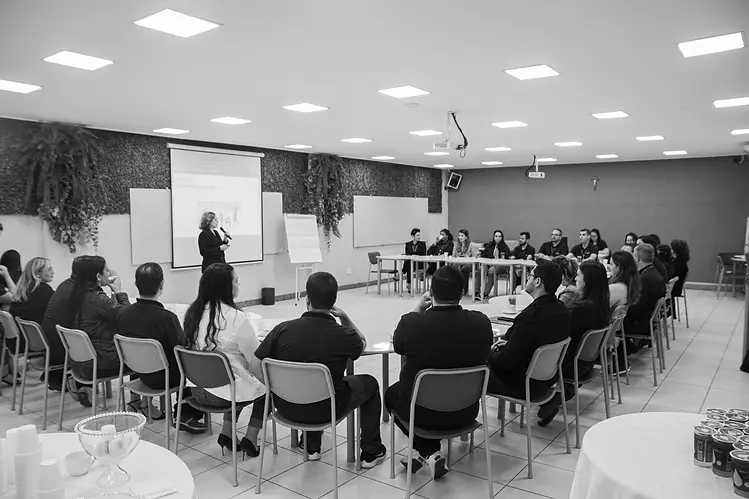
Our approach is practical and applied to the professional context, with participatory activities, simulations, and reflections geared towards the immediate transfer of learning to the work environment.
TARGET AUDIENCE
Training & Development and HR Professionals
Business Partners
Team leaders and managers
Coordination and technical leadership
FORMAT
In-person: 4 hours
Online: 2 hours
Resources: Room with audiovisual support / videoconferencing
If this topic resonates with your company's current situation, the next step can be simple.
In a brief conversation, we understood the team's context, the leadership profile, and the most appropriate format to generate buy-in and results.
Consultative support for HR, Training & Development, Business Partners, and leadership.