

Psychological Safety
in practice
Practical strategies for strengthening trust, engagement, and collaboration in the workplace.
Lecture aligned with NR-1 guidelines — promoting emotional health and preventing psychosocial risks.
LEARN TO LEAD TEAMS WITH PSYCHOLOGICAL SAFETY
An immersive journey for leaders who want to create trusting environments where people feel safe to speak up, propose ideas, and learn from mistakes.
More than just concepts about organizational culture, this journey develops concrete leadership behaviors that strengthen dialogue, accountability, and collaboration within teams.

The challenge in organizations
Many teams avoid expressing concerns, sharing ideas, or admitting mistakes for fear of judgment or negative consequences.
This reduces:
Innovation and quality
It weakens engagement and collaboration.
It increases emotional tension at work.
Leaders don't need policies that don't work.
They need concrete behaviors that build trust and security within the teams.

What leaders will learn:
A space to develop leadership practices that encourage participation and open dialogue, strengthening trust and psychological safety within teams.
Benefits
for the Leader
Greater security in dealing with errors and discrepancies.
More open and constructive communication
Practical tools to encourage participation and dialogue.
Benefits for the Environment & Team
Improved quality in decision-making and teamwork.
Greater innovation and utilization of human potential.
Reducing errors, operational failures, and organizational risks.

1) ABERTURA — POR QUE A SEGURANÇA PSICOLÓGICA FORTALECE EQUIPES E RESULTADOS
-
Understanding how trust influences learning, innovation, and job performance.
2) WHAT HAPPENS WHEN PEOPLE ARE AFRAID OF MAKING MISTAKES (Based on the approach of Amy C. Edmondson — The Fearless Organization)
-
Because the fear of making mistakes or disagreeing reduces participation, it weakens dialogue and increases interpersonal risk.
3) Leadership Behaviors That Build Psychological Safety
-
Leadership practices that encourage trust, participation, and the promotion of learning from mistakes and different perspectives.
4) DEALING WITH DISAGREEMENTS, MISTAKES AND TENSIONS WITHIN TEAMS
-
Strategies for responding to mistakes, questions, and disagreements without compromising trust, respect, and boundaries.
METHODOLOGY
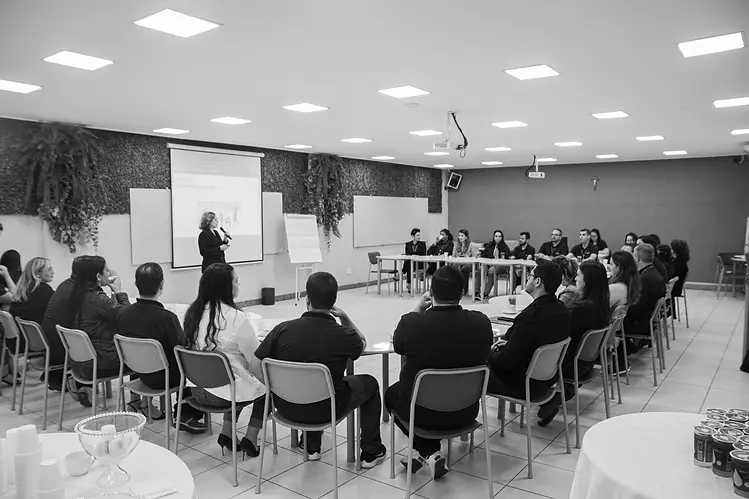
Our approach is practical and applied to the professional context, with participatory activities, simulations, and reflections geared towards the immediate transfer of learning to the work environment.
TARGET AUDIENCE
Training & Development and HR Professionals
Business Partners
Team leaders and managers
Coordination and technical leadership
FORMAT
In-person: 4 hours
Online: 2 hours
Resources: Room with audiovisual support / videoconferencing
If this topic resonates with your company's current situation, the next step can be simple.
In a brief conversation, we understood the team's context, the leadership profile, and the most appropriate format to generate buy-in and results.
Consultative support for HR, Training & Development, Business Partners, and leadership.